When most people picture an African safari, it’s familiar animals that come to mind. Lions moving through the grass, elephants gathering at the river and birds flying overhead. These moments are unforgettable, but they’re only part of the story. Zambia, particularly the Lower Zambezi, is home to many species that are less known yet often become the sightings guests talk about most. With a different pace shaped by the river and the space around it, encounters feel more personal and less like a checklist.
Part of what sets Zambia apart from other traditional safari locations is the focus on authentic, immersive experiences. The lower tourist density allows for less well-known wildlife sightings feeling more accessible and welcoming animals beyond the Big Five. The slower safari styles such as the canoe and walking safaris reinforce this different perspective. At Royal Zambezi Lodge, our expert guides and close proximity to the river promises uninterrupted wildlife encounters where you feel part of the setting you are in.
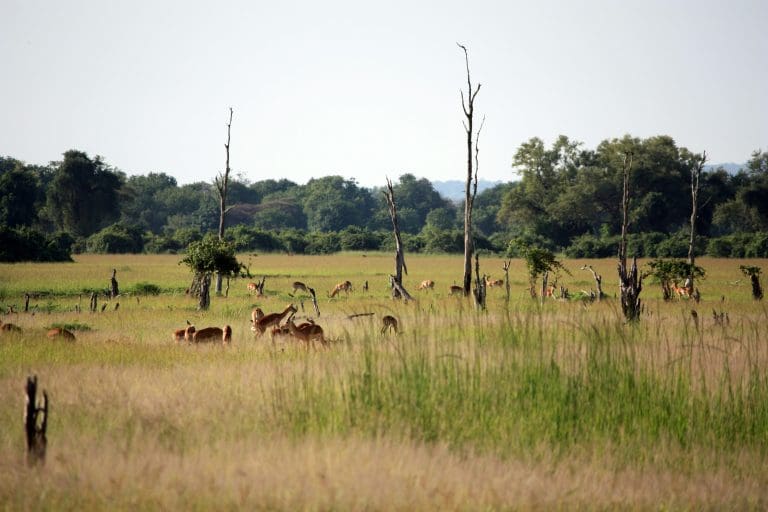
A sighting of African wild dogs tends to catch people off guard as they move and hunt differently compared to other predators most expect to see. Lean and long-legged, these mammals move with a speed and coordination that’s hard to follow at first. Unlike lions or leopards, wild dogs are constantly in motion, hunting as a group with remarkable precision.
Being one of Africa’s most endangered predators, sightings of these species are even more significant. In the Lower Zambezi, they appear without much warning, often crossing open ground or moving along the river edge, making encounters feel unplanned and natural.
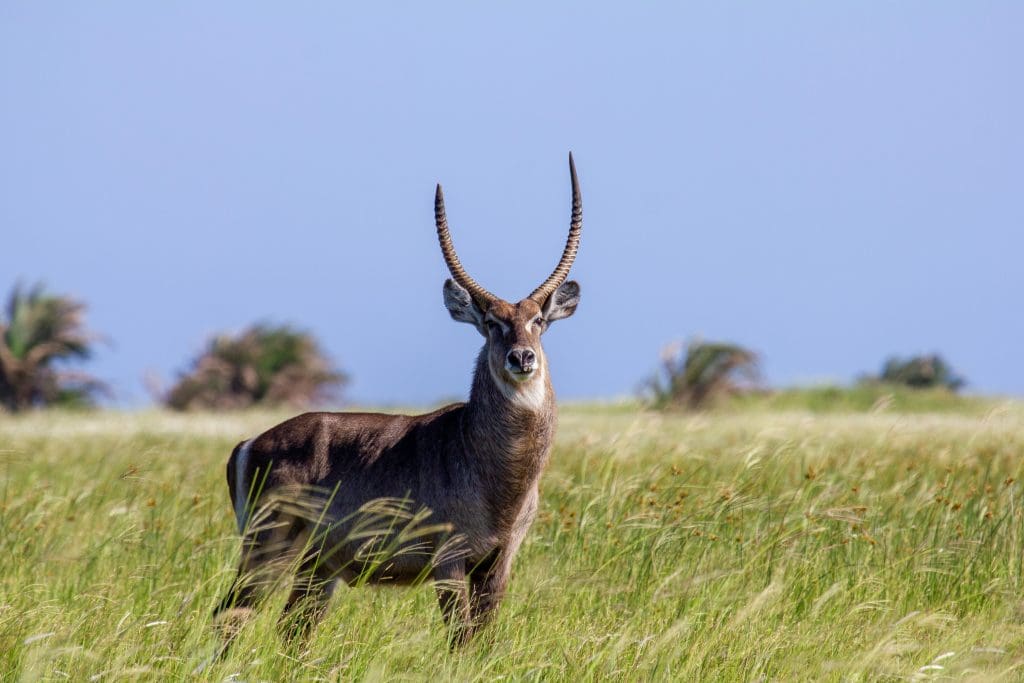
Waterbuck are one of the more understated animals of the Lower Zambezi, but they suit the landscape perfectly. As their name suggests, they’re rarely far from water, making Zambezi River an ideal place to see them. These large, sturdy antelopes have shaggy grey-brown coats and a distinctive white ring around the rump. You may see them grazing near the riverbank, standing in the shade during the heat of the day, or moving cautiously back towards thicker cover. These animals may not create the same instant excitement as a lion or leopard sighting, but they help define the river setting.
The Verreaux’s eagle-owl is one of those sightings that can easily be missed without an experienced guide. It is Africa’s largest owl, often found resting in large riverside trees during the day. Its most distinctive feature is its pale pink eyelids, a detail that often surprises guests when seen through binoculars. At first, it may appear as little more than a shape tucked into the branches. In the Lower Zambezi, this kind of sighting adds depth to a safari. It reminds you that the wildlife experience is not limited to the obvious or dramatic.
Despite its name, the honey badger has very little interest in keeping a low profile. Small but remarkably fearless, it has earned a reputation as one of Africa’s toughest animals, known for standing its ground against predators many times its size. With its distinctive black body and broad silver-grey back, it’s immediately recognisable when it appears. Honey badgers are usually solitary and spend much of their time foraging, using powerful claws to dig for insects and roots. They are most active during the cooler hours of the day and after dark, making sightings relatively uncommon.
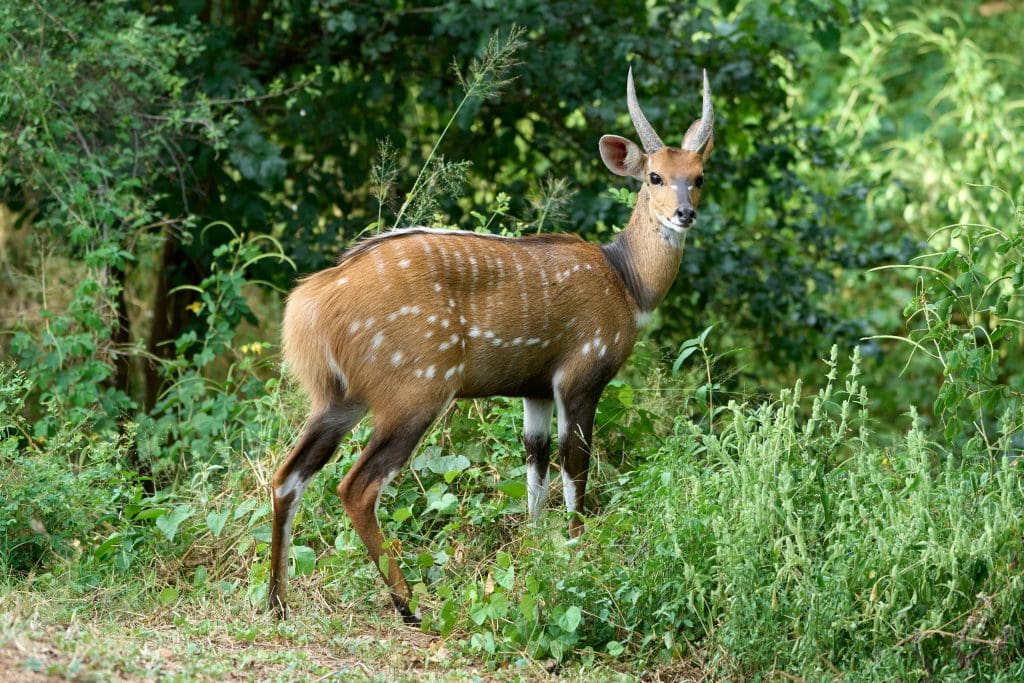
Bushbuck are smaller than many antelope and are easy to miss if you’re not looking for them. They move through dense vegetation and prefer cover, stepping out occasionally at the edge of clearings. Sightings of bushbuck tend to happen in quieter moments, during early mornings or at dusk. These species don’t demand attention like many other larger animals, and spotting one feels more rewarding for those who do catch a sighting.
What stands out about these animals isn’t just that they’re less well-known. It’s how you encounter them. In a setting like the Lower Zambezi, there’s space to observe without interruption with time to watch behaviour rather than move on to the next sighting.
Whether it’s following a pack of wild dogs for longer than expected, drifting past a colony of bee-eaters, or noticing the quiet presence of antelope near the water, the experience feels more personal.
At Royal Zambezi Lodge, that connection is part of the rhythm of each day. The river draws wildlife in, and the slower pace allows for a different kind of safari. One where the smaller, less familiar moments often become the most memorable.
A safari in Zambia has a way of shifting expectations. The well-known sightings are still there, but they’re balanced by moments you didn’t plan for. Animals you hadn’t heard of before the trip start to take on their own significance, not because they’re rare in the traditional sense, but because of how and where you see them. It’s this sense of discovery that defines the experience. Your safari becomes less about ticking off a list and more about noticing what’s around you. Often, it’s these unexpected encounters that stay with you long after you leave.
Ready to book your safari? Explore our packages today or speak to an expert to find out more about the Lower Zambezi.